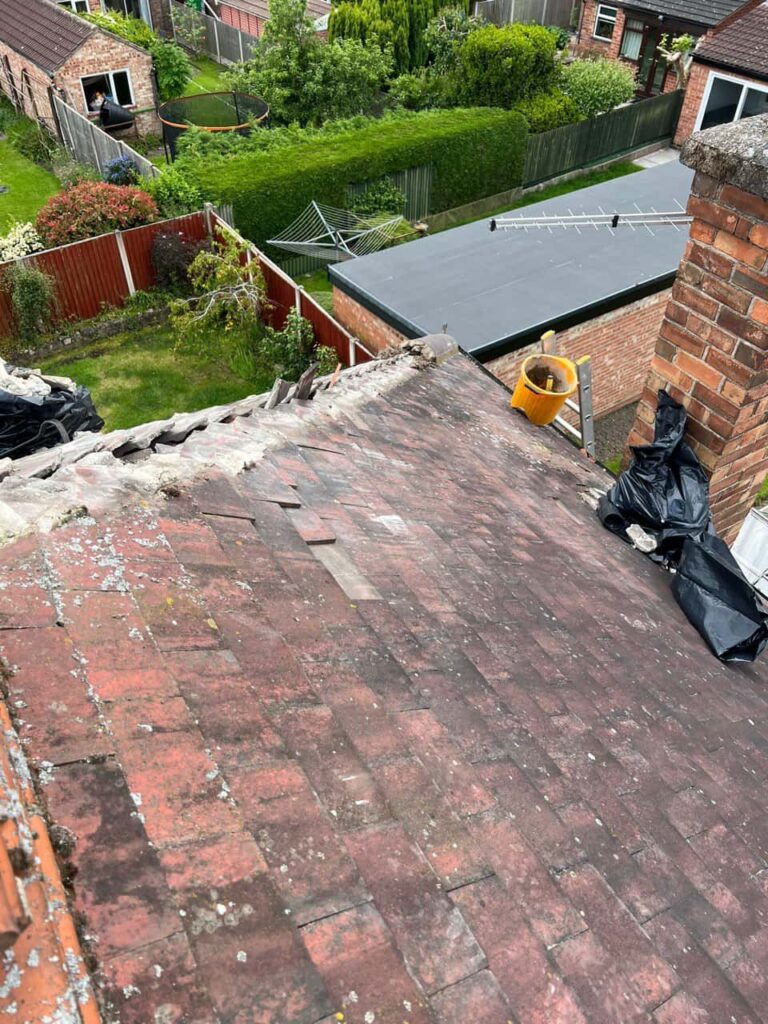
Not every roofing defect requires an emergency response, but some problems cannot safely wait for routine attention. Active water entry, displaced materials and structural movement can expose a property to further damage within a short period.
An emergency roof repair is intended to stabilise the affected area, reduce immediate water ingress and prevent loose materials from causing further problems. For property owners in Ilkeston, Nottingham, recognising the urgent warning signs helps ensure that serious damage receives appropriate attention.
Signs That Roof Damage Needs Emergency Attention
The urgency of a roofing problem depends on its severity, position and effect on the property. A single cracked tile may still need prompt repair, but active water entry or widespread storm damage requires a faster response.
Where conditions make a permanent repair temporarily impractical, emergency work may involve securing the area and providing short-term protection until the roof can be repaired properly.
Water Is Entering the Property Actively
Continuous dripping or running water during rainfall is a clear sign that the roof is no longer providing effective protection. Water may spread through insulation, plasterboard and timber before it becomes visible in an occupied room.
Urgent attention is particularly important when the flow is increasing or affecting more than one area. The internal location of the leak may not be directly below the external defect, so the roof must be inspected systematically.
A Ceiling Is Bulging or Sagging
A ceiling that begins to bow, bulge or sag may be holding trapped water. The affected section can become unstable as the plasterboard absorbs moisture.
People and movable possessions should be kept away from the area beneath it. The roof leak needs urgent investigation, while the condition of the ceiling may also require separate assessment.
Water Is Close to Electrical Fittings
Moisture around lights, sockets, wiring or other electrical components requires immediate caution. The affected area should not be touched or approached unnecessarily.
A roofing contractor can address the external source when conditions permit, but appropriate electrical assistance may also be needed. The priority is to keep people away from the wet area and prevent continued water entry.
Tiles or Slates Are Falling From the Roof
A slipped tile that remains on the roof may leave an opening through which rain can enter. If tiles, slates or pieces of mortar are falling to the ground, the problem becomes more urgent because loose materials can affect areas below.
Access around the affected side of the property should be restricted until the roof has been made secure. Attempting to reposition materials without appropriate equipment can increase the danger.
Strong Winds Have Exposed a Large Section
Storms can lift groups of tiles, tear flat roof membranes or damage ridge and verge details. Even if rain has stopped, an exposed roof remains vulnerable to the next period of bad weather.
Widespread displacement usually requires emergency attention because the underlay may now be carrying water it was not intended to manage for long periods. Any loose surrounding materials should also be checked.
A Tree or Heavy Object Has Struck the Roof
Impact damage can affect more than the visible covering. Tiles, battens, underlay, decking and structural timbers may all be involved.
The building should be approached cautiously if there is visible movement, a hole in the roof or debris resting above occupied rooms. An urgent professional assessment can determine whether temporary stabilisation is needed before permanent repairs begin.
A Flat Roof Membrane Has Torn or Lifted
Flat roof coverings rely on continuous, sealed surfaces. A large tear, open seam or lifted edge can allow water to enter quickly, particularly where rain collects on the roof.
Emergency work may involve securing the loose material or applying a suitable temporary covering. The roof deck and insulation should later be inspected to establish whether moisture has travelled beneath the membrane.
The Roof Structure Appears to Have Moved
New sagging, displaced roof lines or visible internal movement can indicate a more serious problem than a damaged surface covering. Rooms beneath the affected area should not be used until the condition has been professionally assessed.
Structural movement requires urgent attention because ordinary patch repairs may be inappropriate. The immediate priority is to understand the extent of the problem and prevent access to unsafe areas.
Chimney Materials Have Become Loose
Cracked masonry, loose pots, failing mortar or displaced flashing around a chimney can create several risks at once. Materials may fall, while gaps around the chimney can allow substantial water ingress.
Emergency attention may be required where components are visibly unstable or debris has already fallen. The adjoining roof should be checked because impact from loose masonry may have damaged tiles or slates.
When Can a Repair Usually Be Scheduled Normally?
A roofing problem may not require an emergency response when it is stable, localised and not allowing active water entry. Examples might include a minor surface defect, an old stain that is not changing or one damaged tile that remains secure.
These issues should still be assessed promptly. A non-emergency defect can become urgent if weather conditions worsen or surrounding materials begin to move.
What Should You Do While Waiting for Help?
Where it can be done safely, move possessions away from the affected room and place a suitable container beneath a simple drip. Keep people away from bulging ceilings, fallen debris and wet electrical fittings.
Do not climb onto a damaged or rain-covered roof. Temporary work at height requires proper access, equipment and an understanding of how the covering is constructed.
Useful information to provide to the roofer includes:
- Where water is appearing
- When the problem began
- Whether damage followed strong winds or impact
- Which areas are visibly displaced
- Whether materials have fallen
- Whether the internal signs are spreading
Photographs taken safely from ground level or inside the property can also help explain the situation.
Emergency Work May Be Temporary
Severe weather, saturated materials or unsafe access conditions can prevent an immediate permanent repair. In these circumstances, emergency work may focus on stabilising loose components and limiting further water entry.
Once conditions improve, the roof should be inspected again and the permanent repair completed. Temporary protection should not be assumed to have resolved hidden damage beneath the covering.
Why Professional Assessment Matters
The most visible defect is not always the full problem. A roofer should inspect the affected covering, surrounding fixings, underlay, battens, flashing, drainage details and structural elements where accessible.
This helps determine whether the damage is confined to one section or has affected a wider area. Correct diagnosis ensures that emergency measures support an appropriate long-term repair.
Conclusion
Roof damage requires emergency repair when water is entering actively, materials are falling, a large section has been exposed or the structure appears unstable. Bulging ceilings, impact damage and moisture near electrical fittings also require immediate caution and prompt professional attention.
Ilkeston Roofing Repairs provides emergency roof assessments and repairs in Ilkeston, Nottingham. If your roof has suffered sudden or serious damage, contact us so the affected area can be assessed and the appropriate next step determined.
Call us on: 0115 647 1193
Click here to find out more about Ilkeston Roofing Repairs
Click here to complete our contact form and see how we can help with your roofing needs.