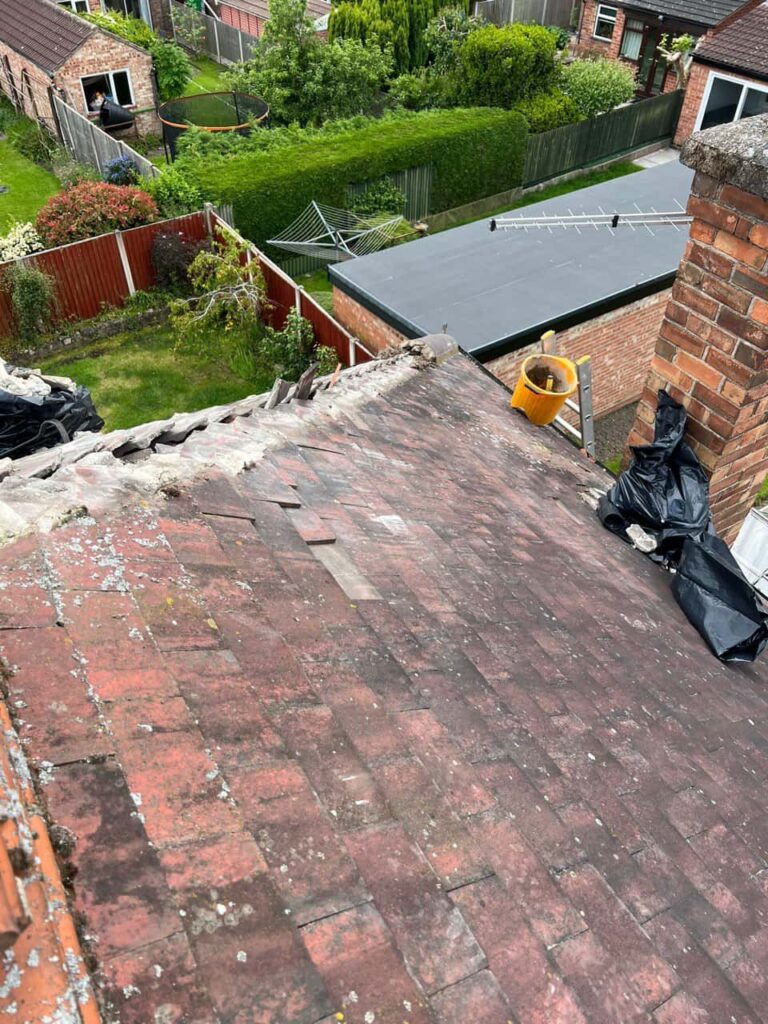
A slipped roof tile is often easy to overlook, particularly if there are no immediate signs of water entering the property. However, in Ilkeston, Nottingham, even a single displaced tile can quickly develop into a more serious roofing issue. Understanding when a slipped tile becomes an emergency helps homeowners take the right action at the right time.
At Ilkeston Roofing Repairs, we regularly attend properties where minor tile movement has led to avoidable damage. Knowing the risks allows problems to be dealt with before they escalate.
Why a Slipped Tile Should Never Be Ignored
Immediate Exposure to the Weather
Roof tiles are the first line of defence against rain, wind and debris. When a tile slips out of position, it exposes the underlying felt and battens, which are not designed to withstand prolonged weather exposure. During rainfall, water can easily penetrate beneath the surface and spread unnoticed.
In Ilkeston’s variable weather conditions, this exposure can quickly lead to moisture entering the roof structure.
Water Can Travel Before Becoming Visible
A common misconception is that roof damage will always show directly beneath the affected tile. In reality, water often travels along timbers and underlay before appearing inside the property. By the time staining or damp patches become visible, the affected area may be far larger than expected.
This hidden movement is why even a single slipped tile can become an urgent issue.
Increased Risk During Windy Conditions
Once one tile has slipped, surrounding tiles may also be at risk. Wind can lift neighbouring tiles more easily, increasing the likelihood of further displacement or tiles falling completely.
Loose tiles can also present a safety risk if they fall from height.
When Does a Slipped Tile Become an Emergency?
During Ongoing or Heavy Rain
If a tile has slipped and rain is forecast or already falling, the situation should be treated as urgent. Active water ingress can cause rapid damage to roof timbers, insulation and internal ceilings.
Prompt attention helps prevent the issue from developing into a leak that affects the interior of the property.
On Steep or Exposed Roof Areas
Tiles that slip on steep roof pitches or highly exposed elevations are more likely to move further or fall. In these cases, emergency attention may be required to stabilise the roof and prevent additional damage.
When Internal Signs Are Present
Damp patches, water marks, dripping or musty smells inside the property indicate that water has already entered the roof space. At this stage, the slipped tile is no longer a minor issue and should be addressed as a priority.
The Benefits of Early Professional Repair
Preventing Further Roof Damage
Repositioning or securing a slipped tile promptly helps protect the surrounding roof structure. Early repairs prevent water from reaching vulnerable components such as battens, felt and insulation.
Maintaining the Roof’s Overall Stability
Tiles work as part of a system. Addressing movement early helps maintain the integrity of the entire roof covering and reduces the risk of further tiles becoming loose.
Avoiding Unplanned Disruption
Timely repairs reduce the likelihood of emergency situations developing unexpectedly, particularly during periods of poor weather.
Conclusion
A slipped tile is not always an immediate emergency, but it should never be ignored. Depending on weather conditions, roof exposure and internal signs, it can quickly become a situation that requires urgent attention. Acting early helps protect the roof structure and prevent avoidable damage.
If you have noticed a slipped or loose tile, Ilkeston Roofing Repairs are here to help. We provide professional roof inspections and repairs throughout Ilkeston, Nottingham, ensuring issues are resolved promptly and effectively. Contact us today to arrange expert advice and reliable roofing support.
Call us on: 0115 647 1193
Click here to find out more about Ilkeston Roofing Repairs
Click here to complete our contact form and see how we can help with your roofing needs.